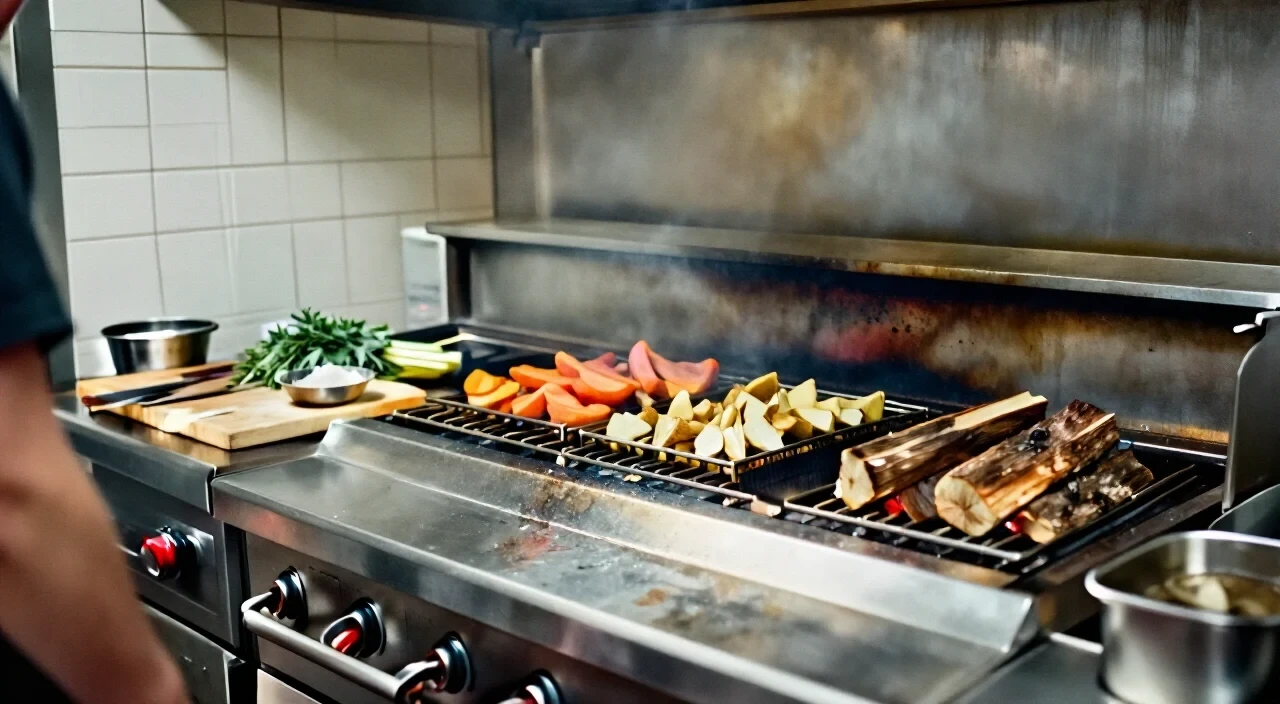
The best autumn recipes for wood-fire grilling combine Luxembourg’s seasonal pumpkins, carrots, chestnuts and local pork with the right wood and safety steps, delivering hearty grilled dishes that fit seasonal cooking and meet allergen rules for families and restaurants alike.
Table of Contents
Key takeaways
- Choose fire-resistant wood like oak or beech
- Use Luxembourg’s autumn produce calendar for ingredient selection
- Declare the 14 mandatory allergens on every dish
- Extinguish the fire immediately after cooking
Which autumn vegetables work best on a wood-fire grill?
Root vegetables such as carrots, parsnips, and beets, along with squash and Brussels sprouts, retain sweetness and develop a smoky crust when grilled over wood-fire, making them ideal for autumn recipes.
Luxembourg’s seasonal-food portal lists carrots, celeriac, pumpkin, and red cabbage as in-season from September to November. Slice these vegetables into uniform pieces—about 1-2 cm thick—to ensure even cooking. Toss with oil, sea salt, and a pinch of smoked paprika, then arrange on the grill with space between each piece to avoid steaming.
A good grilling session lasts 12-15 minutes for carrots and parsnips, 8-10 minutes for sliced pumpkin, and 6-8 minutes for Brussels sprouts. Turn once halfway through to achieve a uniform char. For added flavor, finish with a drizzle of local apple-cider reduction.
- Pick fire-hard wood (oak, beech) that is dry and untreated.
- Keep the grill at a moderate temperature (180-200 °C) to prevent burning.
- Separate vegetarian and meat grilling zones to manage cross-contamination of allergens.
- Record the allergens present (e.g., mustard in the glaze) on the menu as required by Luxembourg HORECA law.
Common mistakes include overcrowding the grill, which traps moisture and leads to soggy vegetables, and using wet or painted wood that produces excessive smoke and harmful fumes.
How can pumpkin be grilled without burning it?
Slice pumpkin into thick wedges, soak them briefly in water, then coat with oil and herbs; grill over indirect heat and finish with a quick sear to avoid burning while preserving a creamy interior.
Start by selecting a small to medium pumpkin that is fully ripe—Luxembourg’s autumn calendar highlights “Cucurbita maxima” varieties in October. Cut the pumpkin in half, scoop out seeds, and slice into 2-cm wedges. Soak the wedges for 5 minutes in cold water; this reduces surface sugars that can scorch.
Pat dry, brush with a mixture of olive oil, crushed garlic, rosemary, and a dash of locally sourced maple syrup. Place the wedges on a pre-heated grill set to indirect heat (no direct flame beneath). Close the lid and cook for 12-14 minutes, turning once. The gentle heat cooks the flesh through without charring.
Finish with a 2-minute direct-flame sear on each side to create grill marks and a smoky aroma. Serve with a drizzle of yoghurt-mint sauce, noting that yoghurt contains milk allergens that must be declared.
- Use a grill thermometer to keep temperature between 160-180 °C.
- Avoid wood that produces resinous smoke, such as pine, which can impart bitter flavors.
- Keep a bucket of water nearby, as required by MeteoLux’s October 2026 guidance, for quick extinguishing if flare-ups occur.
- Record milk as an allergen for any dairy-based sauces.
What meat pairs with roasted root vegetables for a hearty dish?
Local pork shoulder, slow-cooked over oak wood, pairs perfectly with caramelised carrots, parsnips, and turnips, delivering a balanced protein-vegetable plate that satisfies autumn cravings.
Select a pork shoulder cut from a Luxembourg farm, preferably free-range and aged at least 48 hours. Marinate the meat overnight in a blend of mustard (a declared allergen), honey, thyme, and a splash of dry white wine. Pat the meat dry before placing it on the grill.
Set the wood-fire grill to a low, steady heat (around 150 °C). Position the pork on the cooler side of the fire, using a drip pan to catch juices and prevent flare-ups. Roast for 2-2.5 hours, basting every 30 minutes with the leftover marinade.
Meanwhile, toss diced carrots, parsnips, and turnips with oil, sea salt, and a pinch of nutmeg. Add these vegetables to the grill during the final 45 minutes, arranging them around the meat but keeping a safe distance from direct flames.
The result is tender pork with a caramelised crust, complemented by sweet-spiced root vegetables. Slice the pork, plate with the vegetables, and garnish with fresh parsley. Remember to list mustard, honey, and any nuts used in garnish on the allergen declaration.
- Ensure the grill area is free of dry leaves and combustible material, per the Luxembourg fire order.
- Use separate tongs for meat and vegetables to avoid cross-contamination.
- Monitor the internal temperature of pork; it should reach at least 70 °C.
- Keep a fire-extinguishing bucket within arm’s reach throughout cooking.
Fire safety tip: In Luxembourg, outdoor barbecues are allowed only in designated areas. Keep a water source or extinguisher nearby, supervise the fire at all times, and fully extinguish embers before leaving the site to comply with MeteoLux’s October 2026 guidelines.
Can chestnuts be cooked safely on a wood-fire grill in Luxembourg?
Yes—score the shells, place chestnuts in a cast-iron pan over moderate heat, and stir constantly; the process finishes in 15-20 minutes without creating fire hazards when proper precautions are followed.
Begin with fresh chestnuts from local markets; they should feel heavy for their size. Using a sharp knife, cut an “X” on the flat side of each nut—this prevents them from exploding under heat. Pre-heat a cast-iron skillet on the grill over indirect heat (no direct flame).
Add the scored chestnuts in a single layer, cover the pan with a lid or foil, and stir every 3-4 minutes. The gentle, even heat from oak or beech wood cooks the nuts uniformly. After 15-20 minutes, the shells will open and the interior will be tender.
Serve warm, sprinkled with a pinch of sea salt. Since chestnuts are naturally gluten-free and contain no of the 14 declared allergens, no special allergen notice is required, but always verify that no cross-contamination occurs with nut-containing dishes.
- Keep the grill temperature below 200 °C to avoid charring the shells.
- Position the pan away from dry vegetation and keep a water bucket handy.
- Dispose of cooled shells in a sealed container; never discard hot embers in nature.
- Record “none” for allergens, but note the cooking method for transparency.
Frequently asked questions
What wood is best for autumn grilling?
Oak and beech are preferred because they burn hot, produce minimal resinous smoke, and are readily available in Luxembourg. Avoid pine or treated wood, which can release harmful fumes.
Are outdoor barbecues allowed during dry weather in Luxembourg?
Yes, but only in designated areas, with continuous adult supervision, adequate separation from dry vegetation, and immediate access to extinguishing means, as stipulated by the provincial fire order.
How should allergens be handled on a wood-fire menu?
Every dish must list the 14 mandatory allergens, and kitchens should use separate utensils for allergen-free and allergen-containing foods to prevent cross-contamination, complying with Luxembourg HORECA regulations.