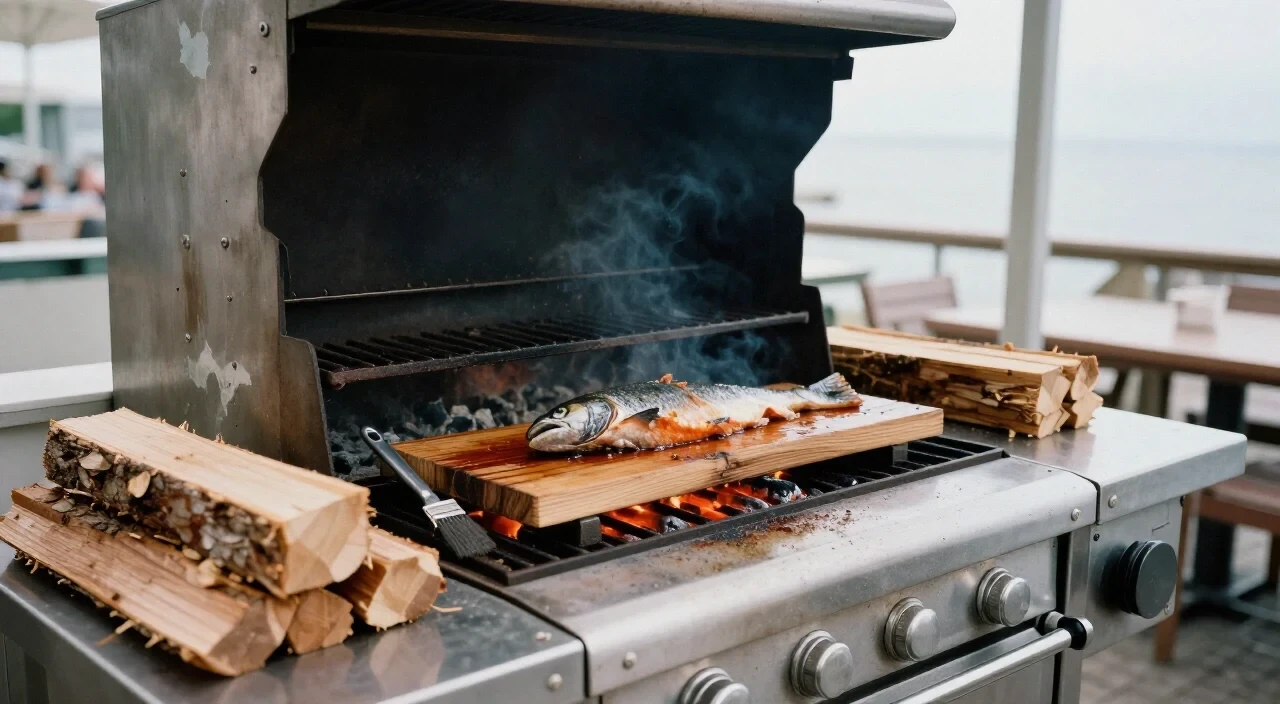
Wood-fire grilled seafood delivers a smoky, caramelized crust while keeping the flesh juicy, thanks to quick, high heat and careful ember control. Choose fresh, traceable fish, use dry hardwood, and monitor internal temperature to reach safe doneness without overcooking for optimal flavor.
Table of Contents
- 01Which fish work best on a wood-fire grill?
- 02Should fish be grilled directly over the coals or beside them?
- 03How can I stop fish from sticking to the grill and keep it moist?
- 04What internal temperature tells me the fish is safely cooked but still juicy?
- 05Frequently asked questions
- 06Sources
- 07Read next
Key takeaways
- Choose firm, meaty fish for direct heat
- Use dry, untreated wood only
- Start over hot embers, finish on a cooler side
- Target 57 °C internal temperature for safety and juiciness
Which fish work best on a wood-fire grill?
Firm, meaty varieties such as sea bass, salmon, turbot and monkfish hold up best on a wood-fire grill, while delicate white fish benefit from indirect heat. Their thickness allows a quick sear without drying, delivering the classic smoky aroma and texture.
These species have enough fat and structure to withstand the high, direct heat of embers without falling apart. For fillets under 2 cm, begin with a sear for 1–2 minutes per side, then slide them to the cooler zone to finish. Whole fish (1–1.5 kg) should be placed on a cedar plank or directly on the grate, turning only once to preserve moisture.
- Sea bass, salmon, turbot, monkfish – ideal for direct sear
- Cod, haddock, sole – better on indirect heat or plank
- Shrimp, scallops – quick 2-minute grill on hot embers
Local suppliers in Luxembourg must provide CATCH-system certificates as of January 2026, ensuring that the fish you purchase is traceable from catch to plate. Ask the fishmonger to show the catch certificate; this also satisfies EU allergen-information rules for restaurants.
Common mistake: putting ultra-thin fillets directly on flames, which creates burnt edges and dry interiors. Adjust heat zones and respect the fish’s thickness for consistent results.
Should fish be grilled directly over the coals or beside them?
For most fillets, place the grill grate over hot embers for a brief, direct sear, then move the fish to a cooler side zone to finish cooking. Whole fish and thicker cuts can start on the side and finish with a quick flare-up for crisp skin.
Direct heat creates the Maillard reaction that forms the prized crust, but it also risks burning delicate flesh. By searing for 1–2 minutes per side, the surface locks in juices. After the sear, shift the fish to an indirect zone—where embers are low and heat is radiant—to allow gentle cooking.
- Fillets < 2 cm: 1-2 min direct, then 3-4 min indirect
- Whole fish > 30 cm: start indirect 8-10 min, finish 2-3 min direct for skin
- Thick steaks (monkfish): 3-4 min indirect, 1-2 min direct
Luxembourg’s combustion-installation regulation (24 April 2018) requires regular chimney cleaning; a clean flue improves heat control and reduces flare-ups that can char fish unintentionally. Keep a small metal shield handy to redirect sudden sparks away from the grill surface.
Mistake to avoid: keeping the fish on the hottest part for the entire cook, which leads to a dry, rubbery texture. Mastering heat zoning is the secret to restaurant-grade grilled seafood.
How can I stop fish from sticking to the grill and keep it moist?
Brush the grate with a thin layer of high-smoke-point oil and pat the fish dry before seasoning; a hot, clean surface creates a seal that releases the flesh naturally. Using a cedar plank or foil basket also eliminates direct contact while adding subtle aroma.
Moisture on the fish surface creates steam, which is the primary cause of sticking. After rinsing, blot the fillet with paper towels, then dust lightly with sea salt—this draws away excess water. Heat the grill until the oil begins to shimmer; only then lay the fish down. It should sizzle immediately; if not, the temperature is too low.
- Use grapeseed, avocado, or refined sunflower oil (high smoke point)
- Pre-heat grill 230–260 °C before adding fish
- For delicate fish, place a soaked cedar plank on the grate for 5 min before the fillet
- A foil basket with perforations allows smoke to circulate while preventing direct contact
Luxembourg’s environmental guidelines forbid burning treated or painted wood. Untreated hardwood not only complies with the law but also produces a clean, aromatic smoke that enhances the fish without imparting toxins.
A frequent error is loading the grill before the oil has heated, causing the fish to stick and tear. Patience at the start saves time and preserves the presentation.
What internal temperature tells me the fish is safely cooked but still juicy?
Aim for an internal temperature of 57 °C (135 °F) measured at the thickest part; the fish will finish rising a few degrees during carry-over cooking. This temperature meets EU safety standards while preserving the tender, moist texture prized in wood-fire grilling.
Insert an instant-read probe at the center of the fillet or the belly of a whole fish. When the reading hits 57 °C, remove the fish from heat; cover loosely with foil for 2-3 minutes to let residual heat finish the job. Overcooking beyond 62 °C (144 °F) makes the protein contract, squeezing out moisture and creating a dry bite.
- 57 °C = safe, juicy, and flake-ready
- 60 °C = very safe, slightly firmer texture
- 62 °C+ = risk of dryness, suitable only for very thick cuts
In Luxembourg, restaurant operators must retain temperature logs for inspection under the 2 April 2026 food-law framework. Even home cooks benefit from documenting the temperature, especially when serving guests with dietary restrictions.
Common pitfall: relying solely on visual cues like opacity; some species stay translucent even when fully cooked. Trust the probe for consistency.
Only use dry, untreated hardwood (e.g., oak, beech) for wood-fire grilling. Treated or painted wood is prohibited in Luxembourg and produces harmful fumes. Clean the chimney monthly to maintain proper airflow and avoid flare-ups that can char seafood.
Frequently asked questions
What wood gives the best flavor for grilled seafood?
Hard, dense hardwoods such as oak, beech or fruit trees (apple, cherry) produce a steady, clean smoke that complements fish without overwhelming it. Avoid softwoods like pine, which release resinous fumes.
How long should a whole sea bass stay on the grill?
For a 600-gram sea bass, grill indirect for 8–10 minutes, then move to direct heat for 2–3 minutes per side to crisp the skin. Check for an internal temperature of 57 °C before serving.
Can I use a gas grill for wood-fire flavor?
A gas grill can mimic wood smoke with wood-chip trays, but EU regulations on traceability and wood handling still apply if actual wood is added. For authentic wood-fire results, a dedicated charcoal or wood grill is recommended.