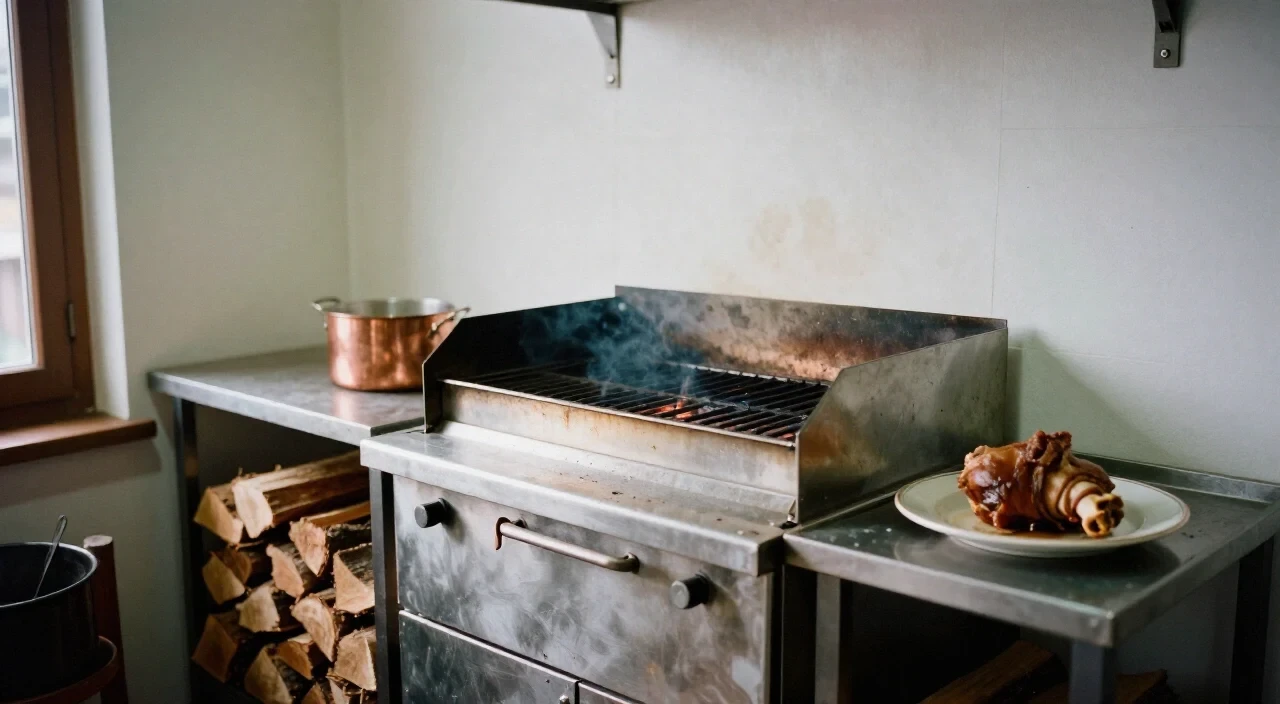
The short answer: wood-fire cooking is indeed woven into Luxembourgish cuisine, especially for dishes like pork knuckle and game, and modern restaurants such as Brasa can offer it legally by following ALVA food-safety rules, municipal fire permits, and proper fuel handling.
Table of Contents
- 01Is wood-fire cooking historically part of Luxembourgish cuisine?
- 02Which traditional Luxembourgish dishes are cooked over fire?
- 03What legal and safety requirements must a Luxembourg restaurant meet to use wood-fire ovens?
- 04How does wood-fire differ from charcoal grilling, and which wood is safe to burn in Luxembourg?
- 05Frequently asked questions
- 06Sources
- 07Read next
Key takeaways
- Wood-fire is a documented part of Luxembourgish culinary heritage.
- Traditional fire-cooked dishes include pork knuckle, Thüringer sausage and game.
- Restaurants must be ALVA-registered, staff HACCP-trained, and use stainless-steel grills.
- Fuel storage, drip-tray use and municipal permits keep the concept safe and legal.
Is wood-fire cooking historically part of Luxembourgish cuisine?
Yes. Historical records show that fire, charcoal and simple grills were used to roast pork, sausages and game in rural Luxembourg, where communal hearths cooked meals for festivals and everyday sustenance. The technique persisted in folk recipes and is still referenced in modern culinary storytelling.
In the 19th-century farmsteads of the Moselle valley, families gathered around a stone hearth to roast whole pigs during the annual *Schäermesse* fair. Those open-flame methods later migrated to market stalls, where vendors grilled *Thüringer* and *Mettwurst* on portable grills. While the industrial era introduced ovens, the scent of wood-smoked meat remained a cultural marker, especially in the Ardennes region where hunters still sear game over a pine-fuelled fire. Contemporary chefs reference this heritage to give dishes a sense of place, but the core practice—direct heat from wood or charcoal—remains unchanged from its agrarian roots.
Which traditional Luxembourgish dishes are cooked over fire?
Typical fire-cooked Luxembourgish dishes include *Gromperekichelcher* (potato fritters) finished on a grill, smoked pork knuckle (*Schweinshaxe*), *Thüringer* sausage, and game such as rabbit or venison seared over open flames. These items appear in seasonal markets and family celebrations across the Grand Duchy.
*Gromperekichelcher* are mixed with grated potatoes, herbs and a touch of onion, then shaped into flat cakes and given a quick sear on a hot grill to develop a crisp crust while retaining a soft interior. *Schweinshaxe* benefits from a slow, indirect wood-fire that renders the meat tender and infuses a subtle smoky flavor; the skin is finished over direct heat for a crackling finish. *Thüringer* and *Mettwurst* are traditionally grilled whole, allowing the natural fats to baste the meat while the smoke adds depth. Game birds, especially rabbit, are split and placed directly on a pine-wood fire, which imparts a light, resinous aroma prized at countryside festivals. Each preparation respects the balance of heat, smoke and timing that defines authentic fire cooking.
What legal and safety requirements must a Luxembourg restaurant meet to use wood-fire ovens?
In Luxembourg, wood-fire cooking is allowed provided the establishment is registered with ALVA, staff hold HACCP or food-hygiene training, grills are stainless-steel and cleanable, fuel is stored away from food, and municipal fire-safety permits are obtained for indoor or outdoor use.
The Luxembourg Veterinary and Food Administration (ALVA) conducts routine inspections; a restaurant must be listed in its database and demonstrate a documented HACCP plan for any special-event grilling. All food handlers need a certified food-hygiene course, which covers cross-contamination and temperature control. Grills used in a restaurant setting must be made of stainless steel, allowing thorough cleaning to prevent residue buildup. Charcoal or wood reserves must be stored in a separate, dry area, never sharing space with dry goods or cold storage. When a fire is lit on a public thoroughfare or in a communal area, the mayor’s authorisation is mandatory, and breaches can lead to municipal fines. Additionally, the venue must install a functional ventilation system, keep a fire-extinguisher nearby, and use drip trays to stop fat from igniting embers, thereby avoiding the formation of harmful combustion products.
How does wood-fire differ from charcoal grilling, and which wood is safe to burn in Luxembourg?
Wood-fire imparts a distinct, aromatic smoke that charcoal cannot replicate, while charcoal offers higher, more consistent heat. Luxembourgish regulations do not ban specific woods, but safe practice favors seasoned hardwoods such as oak or beech, stored dry and away from food-storage zones.
Charcoal burns hotter and with less flare-up, making it ideal for rapid searing, but it lacks the complex phenols that give wood-smoked dishes their signature flavour. Wood-fire, especially when using seasoned oak, beech or chestnut, releases a gentle stream of smoke that penetrates the meat, creating a layered taste profile prized in traditional recipes. The law only restricts the handling of fuel: it must be kept in a dry, ventilated store separate from food supplies, and any wood used must be free of chemicals or paint. Using wet or treated wood can produce excess creosote, which not only harms flavour but also creates hazardous fumes. Restaurants therefore rotate a stock of well-cured hardwood, monitor ash accumulation, and clean the firebox regularly to maintain compliance and safety.
Practical tip: Always place a drip tray beneath the grill to catch fat. This prevents flare-ups, reduces the formation of harmful polycyclic aromatic hydrocarbons, and keeps the fire-safety officer satisfied during inspections.
Frequently asked questions
What wood types are legally permitted for cooking in Luxembourg?
Seasoned hardwoods such as oak, beech or chestnut are accepted. The law does not list prohibited species, but the wood must be untreated, dry, and stored separately from food areas.
Can a restaurant install an indoor wood-fire oven without a special permit?
No. An indoor wood-fire oven requires a municipal fire-safety permit and must meet ventilation standards. The establishment also needs ALVA registration and staff HACCP training before serving fire-cooked dishes.
Are there any traditional Luxembourgish foods that cannot be prepared on a wood fire?
Raw minced-meat items like hamburgers are prohibited for open-fire grilling under Luxembourg food-law. Other dishes, such as sausages, pork knuckle and game, are allowed when prepared with proper safety measures.