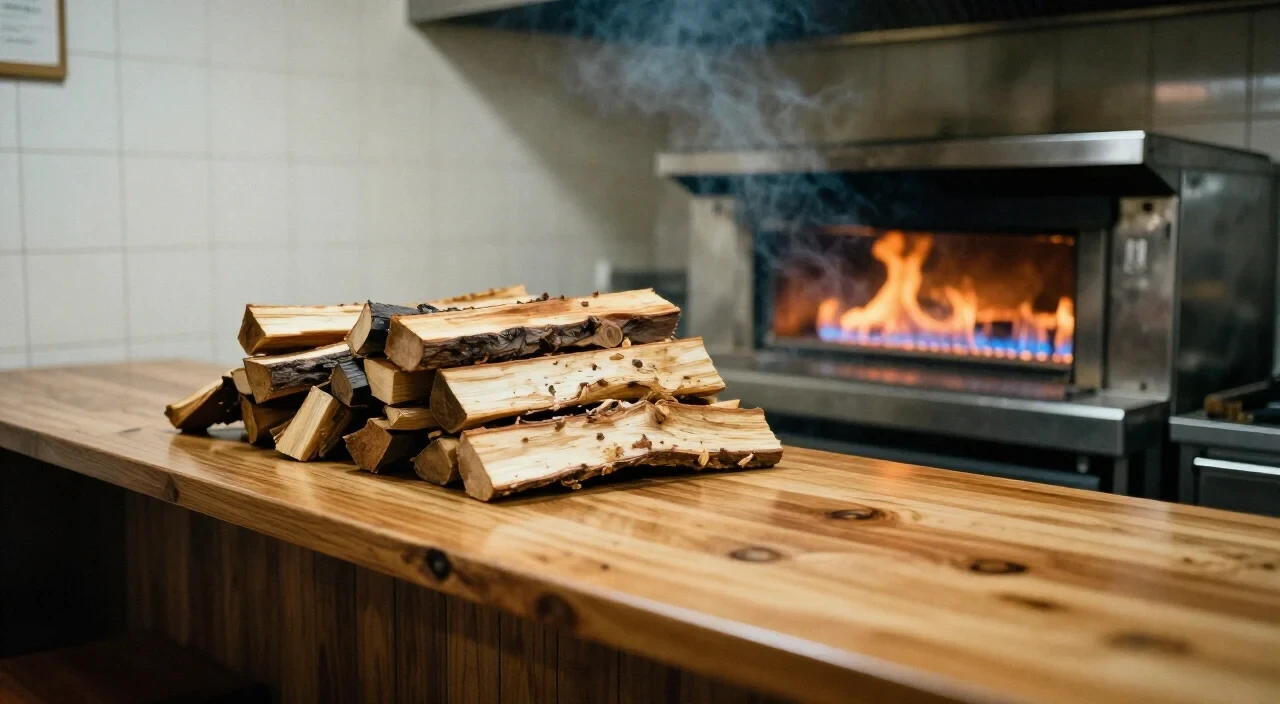
Wood-fire cooking science studies how the combustion of dry hardwood creates high, oxygen-rich heat and controlled smoke, delivering both the sear and aromatic compounds that define the cuisine. Understanding heat transfer, moisture content, and smoke chemistry lets chefs like Brasa’s Mateus Ferreira produce consistent, flavorful dishes safely.
Table of Contents
Key takeaways
- Dry, untreated hardwood yields the hottest, cleanest fire.
- Moisture lowers temperature and increases visible smoke.
- Hardwoods give mild, nutty smoke; softwoods are unsuitable.
- Regular chimney cleaning and filters keep emissions low.
- Luxembourg requires registration of solid-fuel installations.
How does wood moisture affect heat and smoke?
Moisture in wood absorbs energy to evaporate water, lowering flame temperature and producing more visible smoke. Dry wood burns hotter and cleaner, delivering the high heat needed for searing while reducing fine-particle emissions. This is why Brasa only uses seasoned hardwood.
When water evaporates, it consumes up to 2,400 kJ per kilogram, pulling heat away from the fire. The result is a slower rise in temperature and a longer smouldering phase where incomplete combustion creates carbon monoxide, polycyclic aromatic hydrocarbons and other pollutants. In a restaurant setting, this not only affects flavor but also triggers stricter local air-quality controls.
Practical steps for chefs and home cooks:
- Measure wood moisture; ideal range is below 20 %.
- Store logs in a dry, ventilated shed for at least six months.
- Split wood before seasoning; smaller pieces dry faster.
- Avoid freshly cut (green) wood, which releases sap and resin.
- Inspect each batch for signs of dampness (dark spots, spongy texture).
Common mistake: letting the fire die down to a smouldering ember. The ember continues to produce smoke without useful heat, increasing the risk of violating Luxembourg’s emissions rules. Keeping the fire at a steady, red-hot stage ensures complete combustion and a cleaner dining environment.
When in doubt, consult a local fire-safety officer or a certified chimney-sweep to verify that the wood supply meets the city’s recommendation for dry fuel.
What type of wood gives the best flavor and safest smoke?
Hardwoods such as oak, beech or chestnut provide dense fuel, steady high heat, and a mild, nutty smoke that enhances food without overwhelming toxins. Softwoods burn faster, produce more resinous smoke and are discouraged for cooking, especially in a regulated setting like Luxembourg.
Hardwoods have a higher calorific value (about 18-20 MJ/kg) than softwoods, which means they release more energy per unit mass and maintain a hotter fire longer. The combustion of hardwood produces fewer volatile organic compounds because the resin content is low. This translates into a cleaner aroma that complements grilled meat, fish and the thin crust of a wood-fired pizza.
In contrast, softwoods such as pine or fir contain resin that vaporises at lower temperatures, creating thick, acrid smoke rich in phenols and terpenes. Those compounds can impart a bitter taste and, when inhaled, may irritate the respiratory tract. Luxembourg’s fire-risk regulations specifically advise against burning painted, treated or contaminated wood for the same health reasons.
Choosing the right wood at Brasa:
- Primary fuel: seasoned oak sourced from local sustainable forests.
- Secondary flavor wood: small bundles of beech added briefly for a subtle sweet note.
- No softwood or reclaimed timber is ever introduced into the hearth.
Mistake to avoid: mixing hardwood with softwood scraps for convenience. Even a small amount of pine can cloud the fire, increase smoke density, and trigger neighbour complaints under the city’s nuisance guidelines.
If a restaurant wishes to experiment with exotic woods, it must first verify that the material is untreated and obtain clearance from the Luxembourg Environment Agency to ensure compliance with solid-fuel installation rules.
How can a wood-fire restaurant reduce smoke and stay compliant in Luxembourg?
By burning only dry, untreated hardwood, maintaining a hot, oxygen-rich flame, regularly cleaning chimneys, and using filters where required, a restaurant minimizes pollutants and meets Luxembourg’s combustion-installation rules. Brasa follows these practices and registers its solid-fuel system with the Environment Agency.
The city’s public health office stresses that incomplete combustion—visible as lingering grey smoke—indicates a lack of oxygen or excess moisture. Operators therefore adjust the air inlet on the hearth to supply enough oxygen, which pushes the fire into the complete-combustion zone where carbon converts to CO₂ rather than CO.
Routine chimney maintenance is mandatory. Luxembourg City recommends cleaning the flue at least twice a year, or after every 30-40 hours of intensive use. Brasa schedules a professional sweep after each service cycle, removes creosote buildup, and inspects the draft to prevent back-flow of smoke into the dining area.
Filters are optional for main-heating installations but strongly advised for commercial kitchens. A high-efficiency particulate air (HEPA) filter placed at the exhaust reduces fine particles below the city’s threshold for outdoor air quality. While not legally required for a restaurant, Brasa installed a stainless-steel filter to respect neighbour comfort and to align with the city’s recommendation for “good-quality equipment”.
Compliance checklist for wood-fire eateries in Luxembourg:
- Use only seasoned, untreated hardwood.
- Keep the fire hot (red-hot stage) with adequate oxygen supply.
- Register the solid-fuel system with the Environment Agency.
- Perform chimney cleaning twice yearly or after heavy use.
- Install a filter if the venue is located near residential buildings.
- Keep a record of fire-risk orders; suspend open-flame service during provincial bans.
When a temporary forest-fire order is issued (as in the Belgian Province of Luxembourg in September 2026), restaurants may continue indoor cooking but must ensure any outdoor cooking is supervised, at a safe distance from combustibles, and equipped with an extinguisher.
If uncertainties arise, Brasa consults the municipal fire department and the Environment Agency to verify that its operational practices remain within legal limits.
What temperatures are ideal for wood-fired pizza and grilling?
Wood-fired pizza cooks best at 350-400 °C (660-750 °F), delivering rapid oven-spring and charred crust. Grilling meats benefits from 200-250 °C (390-480 °F) for searing, then a lower zone around 130 °C (265 °F) to finish without drying. Brasa’s open hearth is calibrated to these ranges.
At 350-400 °C the dough’s moisture evaporates instantly, creating steam that expands the gluten network and yields the signature airy rim. The intense radiant heat also triggers Maillard reactions on the surface, producing the smoky, caramelised flavour that diners associate with authentic wood-fire pizza. Brasa positions the pizza stone near the hottest part of the hearth, rotating the pie every 30 seconds to ensure even browning.
For meats, the initial 200-250 °C sear creates a crust that locks in juices. After the exterior is browned, the chef moves the cut to a cooler section of the fire (around 130 °C) to finish cooking gently. This two-zone approach prevents over-cooking while preserving tenderness. Brasa’s chef-counter service lets guests watch the transition, reinforcing the link between temperature control and final taste.
Temperature management tools:
- Infrared thermometer for spot-checking the stone or grill surface.
- Adjustable air vents on the hearth to raise or lower flame intensity.
- Visual cues: a bright orange flame indicates the optimal pizza zone; a softer blue-orange indicates the grilling zone.
Common mistake: relying solely on time without monitoring heat. A pizza left too long at 350 °C can burn before the centre sets, while a steak kept at 250 °C for too many minutes becomes dry. Using a thermometer and moving food between zones keeps the cooking chemistry balanced.
When the city issues a temporary fire-risk restriction, Brasa may lower the hearth temperature to stay within safe limits, but still delivers the same flavor profile by extending cooking time slightly and increasing airflow to maintain clean combustion.
Always let the fire reach a steady, red-hot stage before placing food; this ensures complete combustion, reduces harmful smoke, and maximises the heat needed for authentic wood-fire flavor.
Frequently asked questions
Is wood smoke safe to eat?
When the fire burns hot and dry, the smoke consists mainly of water vapor and small amounts of harmless aromatic compounds. Incomplete combustion produces fine particles and carbon monoxide, which can be irritating. Brasa’s rigorous fire-management keeps smoke at safe, low-level concentrations.
Do I need a permit to dine at a wood-fire restaurant in Luxembourg?
Guests do not need a personal permit. The restaurant itself must register its solid-fuel installation with the Luxembourg Environment Agency, keep the chimney clean, and follow city guidelines on dry wood and air-quality. Brasa complies with all required registrations.
Can I request a private tasting menu at Brasa?
Yes. Brasa offers a private dining room for up to 12 guests, where the chef-owner prepares a six-course tasting menu (78 EUR) or the exclusive Chef’s Counter experience (95 EUR). Reservations are made by phone at +352 27 86 40 12.