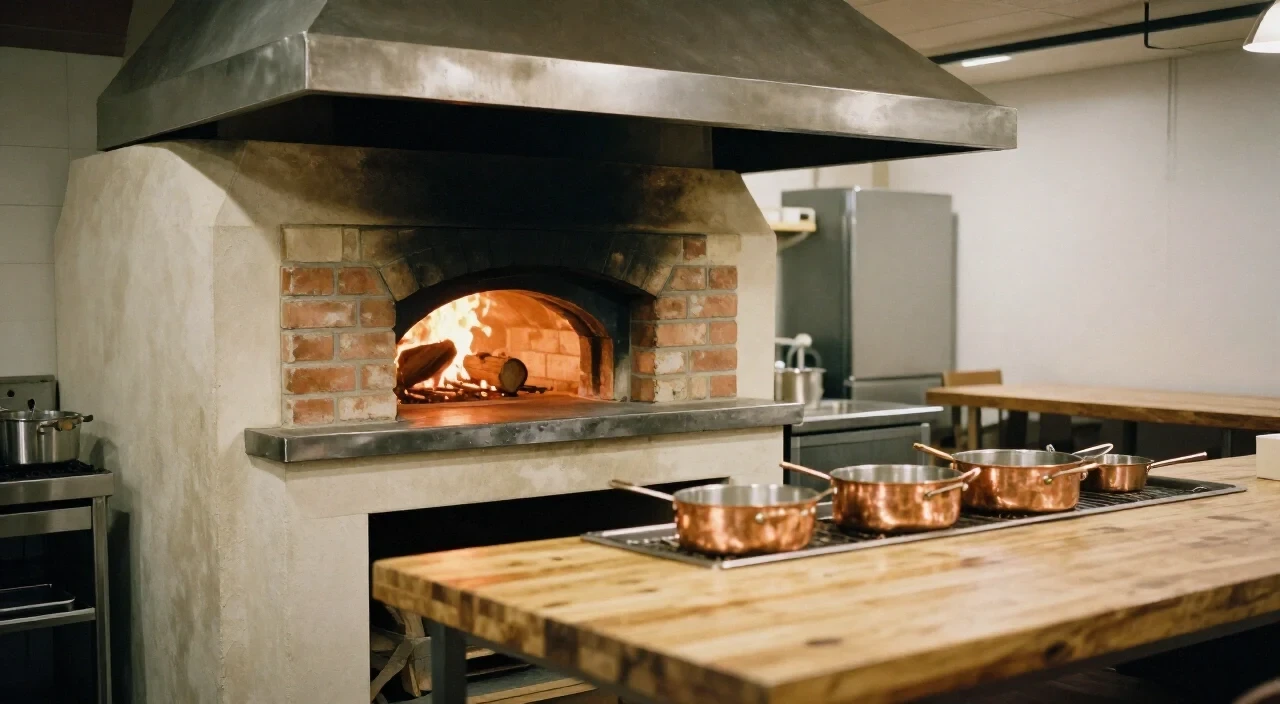
Wood-fire cooking history begins with the discovery of fire by early humans, who used open flames to roast game. Over thousands of years the technique spread through ancient Egypt, Greece, and Asia, was further developed in medieval Europe and today fuels modern restaurants that celebrate distinctive flavor.
Table of Contents
Key takeaways
- Earliest hearths date back over a million years
- Wood-fire spread via trade, migration, and religion
- Core techniques: direct grilling, indirect smoking, ember-basting
- Modern chefs value flavor, visual appeal, and sustainability
When did humans first use wood for cooking?
Archaeological evidence shows Homo erectus controlled fire about a million years ago, using embers to warm and cook meat. These early hearths were simple pits dug in the ground, often lined with stones to retain heat, laying the foundation for later culinary traditions worldwide.
The earliest known sites, such as Wonderwerk Cave in South Africa, contain ash layers and burnt bone fragments, indicating repeated fire use. Over time, people learned to manage airflow with windbreaks and to select dry hardwood for steadier heat. The shift from opportunistic fire to deliberate cooking accelerated dietary diversification and social bonding.
In Europe, the Neolithic period introduced permanent settlements with communal ovens, while in East Asia, pit-grilling of fish and game became ritualized. Each region adapted the basic principle—heat from wood—to local ingredients and cultural needs, a pattern that repeats throughout history.
- Look for archaeological layers with charcoal and bone.
- Note the type of wood: hardwood burns longer and hotter.
- Recognize that early fire control required constant attention and skill.
How did wood-fire cooking spread across different cultures?
From the Mediterranean to East Asia, wood-fire cooking traveled along trade routes, religious pilgrimages, and migrations, each culture adapting the flame to local ingredients and rituals. The method became central to communal feasts, street stalls, and palace kitchens, creating a range of techniques still used today.
In the Roman Empire, portable braziers allowed soldiers to grill meat on campaign, spreading the practice across Europe. Arab traders introduced charcoal-based grilling to the Iberian Peninsula, where it mixed with indigenous spit-roasting. In the Indian subcontinent, tandoor ovens—clay chambers heated by wood—became a staple for breads and kebabs.
East Asian cultures refined low-and-slow smoking, using fruitwoods like apple or cherry to flavor fish and pork. Meanwhile, the Americas developed open-air pit barbecues, later influenced by European colonists. Each exchange added new wood types, seasoning blends, and cooking vessels, expanding the global variety of wood-fire cooking.
- Identify regional wood varieties (oak, beech, fruitwood).
- Observe how local dishes incorporate smoke (e.g., Spanish chorizo, Japanese yakitori).
- Recognize that migration often carried hearth knowledge as cultural heritage.
What are the key techniques that define wood-fire cooking?
Key techniques include direct grilling over hot coals, indirect smoking with slow-burning wood, and ember-basting that adds smoky flavor while preserving moisture. Mastery of temperature zones, wood selection, and timing allows chefs to achieve crisp crusts, tender interiors, and distinctive aromatics.
Direct grilling uses a high-heat zone (250-300 °C) where food contacts the flames or glowing coals. This creates Maillard browning and a charred exterior. Indirect smoking relies on a lower temperature (90-130 °C) and a steady flow of smoke, ideal for larger cuts that need hours to become tender.
Ember-basting involves drizzling melted butter or oil over food while it rests on the residual heat of embers, infusing a subtle wood-kissed flavor. Temperature control hinges on arranging coals in zones—hot for searing, medium for cooking, and cool for resting.
- Choose hardwood for consistent heat; avoid resinous softwoods.
- Use a thermometer or hand-test to gauge heat zones.
- Rotate food to expose all sides to even smoke.
- Allow meat to rest on the side of the fire to retain juices.
Practical tip: Always season the wood for at least a few hours before lighting. Freshly cut wood releases sap that can produce bitter, resinous smoke, while seasoned hardwood yields a clean, aromatic flame.
Why is wood-fire cooking valued in modern culinary traditions?
Modern chefs prize wood-fire cooking for its ability to impart complex, natural smoke notes that cannot be replicated by electric or gas appliances. The visible flame also creates a visual experience, connecting diners to ancient cooking rituals while showcasing sustainable, locally sourced fuel.
Restaurants such as Brasa in Luxembourg harness this heritage, sourcing regional hardwoods to match seasonal menus. The open fire invites diners to watch the transformation of raw ingredients, turning a meal into a story of fire, wood, and culture. Moreover, the carbon footprint of responsibly harvested wood can be lower than that of fossil-based energy, aligning with growing sustainability goals.
In addition to flavor, wood-fire cooking encourages a slower, more mindful preparation style. Chefs must monitor heat, adjust airflow, and respect the rhythm of the fire, fostering craftsmanship that resonates with diners seeking authenticity.
- Select locally sourced hardwood to reduce transport emissions.
- Pair smoky dishes with simple sides to let the fire’s character shine.
- Train staff on fire safety and temperature management for consistent results.
Frequently asked questions
How long can wood-fire cooked food stay safe to eat?
Food kept at room temperature for more than two hours should be refrigerated. Properly stored leftovers remain safe for three to four days, regardless of the cooking method.
Can wood-fire cooking be done in small urban spaces?
Portable charcoal grills or compact pellet ovens allow city dwellers to enjoy wood-fire flavors. Key is adequate ventilation, fire-proof surfaces, and adherence to local regulations.
What wood types give the best flavor for grilling?
Hardwoods such as oak, beech, and fruitwoods like apple or cherry produce clean, aromatic smoke. Avoid softwoods like pine, which release resin and can create an unpleasant aftertaste.